Which Hydrangea Have You Got? A Pruning Guide by Type
Few shrubs cause more last-minute panic at the secateurs than hydrangeas. Cut one at the wrong moment and you get a summer of handsome leaves and not a single flower. Cut it at the right moment and it will reward you for years. The whole pruning calendar comes down to one question: does your plant flower on last year's wood, or on growth it makes this season? Answer that, and everything else falls into place.
Which hydrangea have you got?
Start with the flowers, then check the leaves and the habit. Most garden hydrangeas fall into four groups, and each needs a different approach.
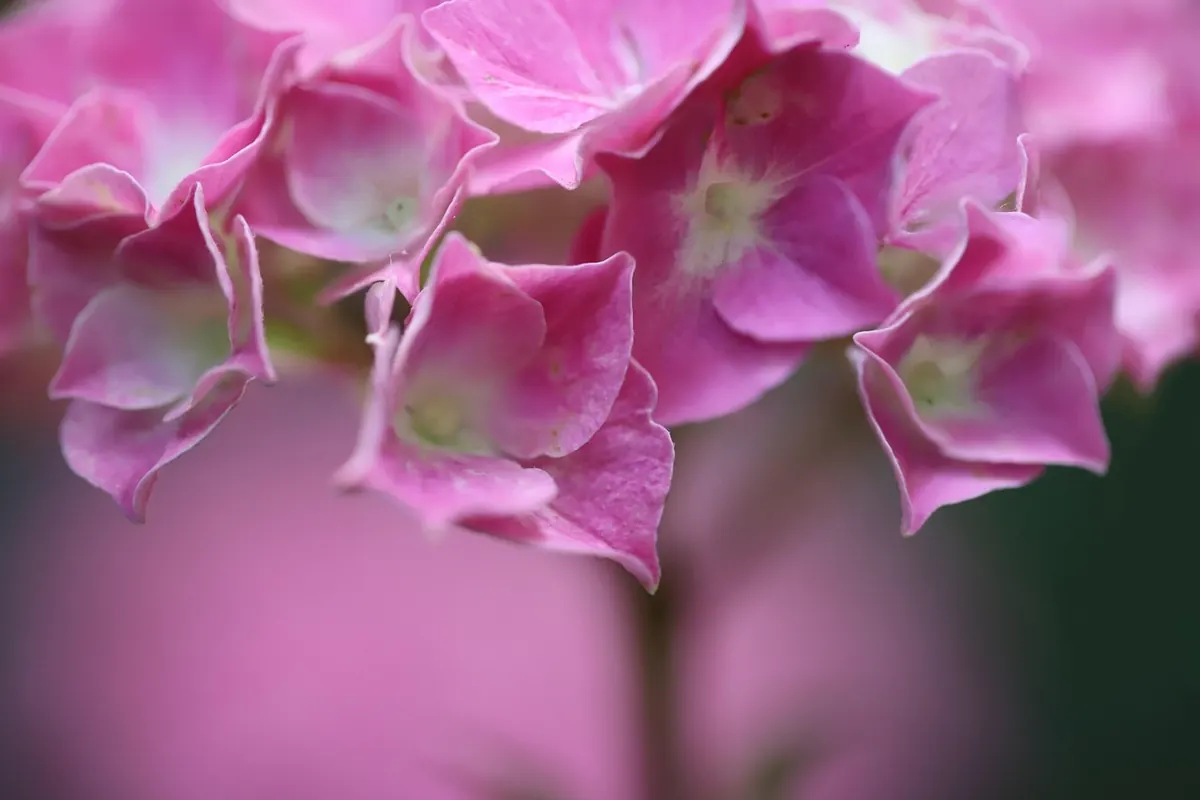
- Mophead (Hydrangea macrophylla): big, round, ball-like heads of pink, blue or purple florets, with coarse, glossy leaves that have toothed edges. Flowers on old wood.
- Lacecap (H. macrophylla and H. serrata): flat, plate-shaped heads — a cluster of tiny fertile florets in the middle, ringed by larger showy ones. Prune exactly like a mophead.
- Paniculata (H. paniculata): long cone-shaped heads, creamy white ageing to pink, on sturdy stems. 'Limelight' and 'Vanille Fraise' are familiar ones. Flowers on new wood.
- Climbing hydrangea (H. anomala subsp. petiolaris): a woody climber with peeling bark and white lacecap flowers in midsummer. Flowers on old wood.
Two more you may meet: H. arborescens 'Annabelle', which carries rounded white heads on new wood, and the oakleaf hydrangea, H. quercifolia, which flowers on old wood and is best left almost alone.
A quick test if you are still unsure
Look at where the flowers sit. If they are opening on stems that were already tall and woody in spring, it is old wood. If the flower buds appear on soft growth that has shot up since March, it is new wood. If you genuinely can't tell, wait. Let it flower this year, take a photo, and identify it before you touch it. A hydrangea left unpruned for one season is far better off than one pruned at the wrong time.
Pruning mopheads and lacecaps
These are the ones people ruin. They set their flower buds in late summer and early autumn, so any spring haircut simply removes next summer's display. Wait until flowering has finished — usually late July into August — then cut each stem that flowered back to a strong pair of buds just below the old flower head. Take out a quarter of the oldest stems right down at the base to keep the plant young and open, and remove anything weak, crossing or trailing on the ground.
Modern repeat-flowering cultivars such as 'Endless Summer' and 'BloomStruck' produce flowers on old and new wood, which means a late frost doesn't wipe out the whole season. Treat them the same way: prune after the first flush of flowers and finish by early autumn.
Spring deadheading, done carefully
By March the old heads look battered, and tidying them is fine — but only cut back to the first fat pair of buds below the head. Go further down the stem and you are cutting off this year's flowers. In cold or exposed gardens, leave the spent heads in place over winter; they shelter the buds underneath from frost.
Rescuing a neglected mophead
If the shrub has become a thicket of thin, flopping stems, you can cut it hard in spring to around 30cm. You will lose the flowers for one season, but the plant will throw up strong new growth and flower again the following year. Feed it, mulch it, and water it in dry spells.
Paniculatas and Annabelles: cut back in spring, not autumn
Because these flower on wood they make this season, pruning is straightforward and forgiving. Do it in late winter to early spring, roughly late February to mid-March, while the plant is still dormant but before growth starts.
- Cut last year's flowering stems back to a strong pair of buds, leaving 30–60cm of stem above ground. That framework is what next season's growth builds on.
- Thin the result. Fewer stems give you fewer but much larger cones; keeping more stems gives a fuller, finer display.
- On a standard or tree-form plant, shorten the sideshoots on the head to a couple of buds and rub out anything sprouting lower down the trunk.
- Feed and mulch afterwards. A handful of general-purpose fertiliser and a bucket of compost is plenty.
'Annabelle' and other arborescens types can be cut to about 30cm, or even to the ground, in late winter. Hard pruning gives sturdier stems, which matters because those big white heads are heavy in rain — a discreet stake or a ring of twine saves a lot of heartache.
Climbing hydrangeas: a little and often, after flowering
Be patient with these. They sulk for a year or two after planting, then romp away, and once they are away they flower on the framework they have built. Prune in late summer, after the lacecaps have faded. Shorten the sideshoots that flowered back to a couple of buds from the main stems, tie in the growth you want to keep, and cut out anything heading for a window, a door or a path. Leave the main framework alone — that is the structure, and next year's flowers come from it. You can tidy the whole thing with shears after flowering, but expect to lose a few blooms the following summer if you do.
Where the rules bend
Oakleaf hydrangeas flower on old wood and resent hard pruning; remove only dead or crossing stems, and give them a sheltered spot. H. serrata cultivars, mostly lacecaps, follow the mophead timetable. And if your mophead flowers blue in one bed and pink in another, that is soil chemistry rather than pruning — acid soil lets the plant take up aluminium, which turns the flowers blue.
If you remember only one thing: prune mopheads, lacecaps and climbers after they flower, and prune paniculatas and Annabelles in late winter.
Keeping it simple
Sharpen your secateurs before you start and make clean cuts just above a bud. Stop feeding by late summer so the plant hardens off before winter, mulch in spring, and water thoroughly in dry spells — a stressed hydrangea flowers poorly whatever you do with the blades. If in doubt, take off only dead wood and spent flower heads, then step back and look. Nine times out of ten, a hydrangea that is left largely alone will out-flower one that has been fussed over at the wrong end of the year.
Photo: Nennieinszweidrei / Pixabay